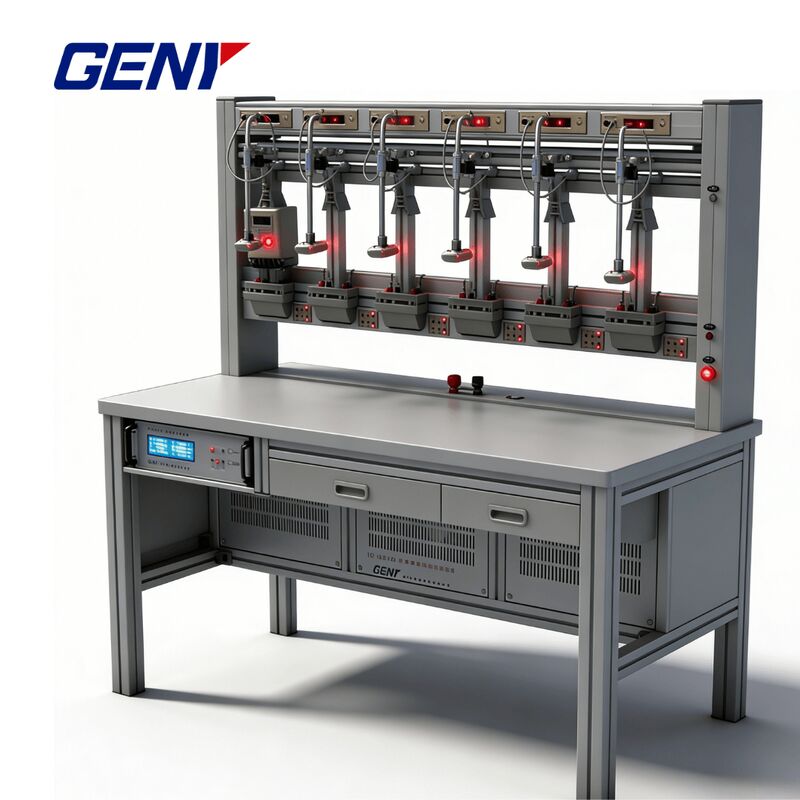
SW-5D bridge wiring method for basic error testing of programmable energy meters
Communication testing, remote meter reading, and computer time synchronization
Meter constant (pulse constant) verification, including:
Pulse counting method
Time measurement method
Stopwatch method
Time-of-use (TOU) testing, maximum demand testing, and display value error verification
Influence tests, including:
Voltage unbalance test
High-order harmonic test
Disturbance tests, including:
Voltage dip test
Short-duration power interruption test
General Functions
Measurement functions: Active power, reactive power, active energy, reactive energy, starting test, and creep test for three-phase energy meters
Accuracy evaluation: Basic error, mean error, standard deviation, and 24-hour stability test for high-accuracy calibration
Voltage and current output: Adjustable frequency and harmonic generation (1st-64th order), supporting phase sequence influence testing
Multi-meter calibration: Simultaneous calibration of energy meters with different accuracy classes and phase sequences; automatic identification of meter constants
Safety protection: Current open-circuit protection and voltage short-circuit protection to ensure reliable calibration operation
Operating modes: Automatic and manual calibration modes
Data processing: Automatic error calculation, data processing, data storage, and PC-based online output
Interfaces: Optical and pulse input channels, flexible configuration, supporting multi-channel meter input
Power source system: Modular high-power three-phase source, special power design with high efficiency and low loss
Standards compliance: Fully compliant with IEC 62053, IEC 597, and R46 requirements for energy meter calibration systems
Mechanical structure: Robust, practical, and professional industrial design for laboratory applications