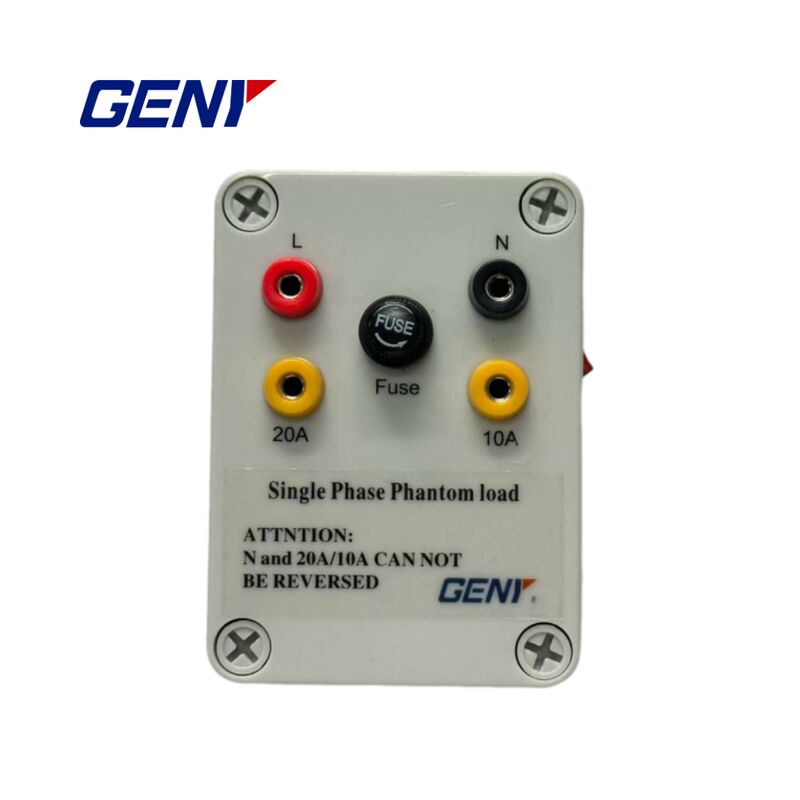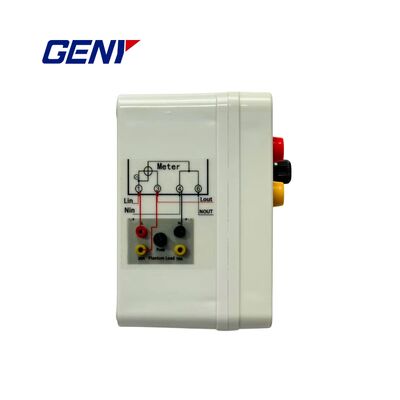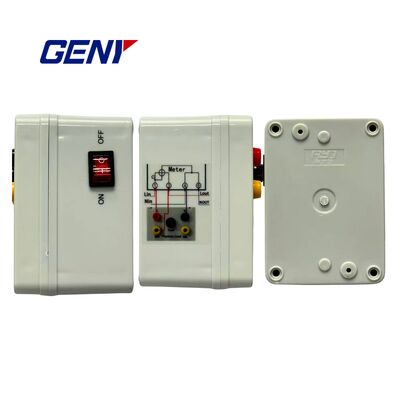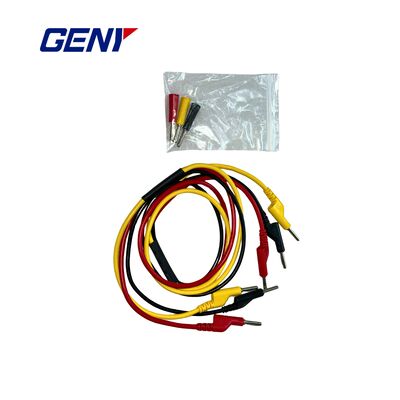
Although the positions of the L(in), L(out), N(in), and N(out) terminals may vary across electricity meters, the wiring principle remains consistent:
The line terminal (L) of the single phase phantom load connects to L(in) of the electricity meter
The neutral terminal (N) of the single phase phantom load connects to N(in) of the electricity meter
The current 20A/10A terminal of the single phase phantom load connects to L(out) of the electricity meter
Operation Instructions
The single phase phantom load provides calibrated current when user load is insufficient for electricity meter testing requirements.
When user load is too low or zero to meet calibration requirements, connect the phantom load according to the wiring diagram
For zero user load: After connecting the phantom load, the current clamp must clamp ONLY the phantom load current cable during error testing
For low user load: The clamp must simultaneously clamp both the phantom load current cable and the original current cable connected to the electricity meter's L(out) terminals to avoid measurement errors
Safety Precautions
Do not reverse-connect current output and neutral wires
Never apply 380V between line and neutral wires
Turn off the phantom load switch before performing on-site wiring