Accurate Current Isolation for Meter Testing 100A

Meter Testing Accessory
January 20, 2026
Category Connection: Meter Testing Accessory
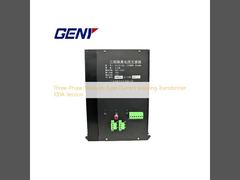
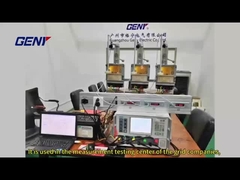
Brief: Need quick answers about practical use? This video highlights the essentials. Watch as we demonstrate how the Three-Phase Through-Type Current Isolating Transformer ensures accurate energy meter testing in closed-link systems. You'll see its electronic error compensation in action, learn about its automatic protection features, and discover how it enables safe, flexible calibration for multi-position test benches.
Related Product Features:
  • Provides true 1:1 current isolation with electronic error compensation for 0.01% class accuracy.
  • Wide current range from 0.1-100 A primary and secondary for versatile testing applications.
  • High output capacity delivers up to 70 VA at 100 A while maintaining precision.
  • Features automatic secondary short-circuit protection and open-circuit/overload indication.
  • Single-turn through-type design ensures energy efficiency with minimal power loss.
  • Supports multi-ICT series primary connection with isolated secondaries per meter position.
  • External status indicators and control buttons enable straightforward operation.
  • Ideal for three-phase and single-phase energy meter calibration with closed links.
FAQs:
  • What is the primary application of this current isolating transformer?
    It is designed for testing three-phase and single-phase energy meters where voltage and current circuits cannot be separated (closed links), ensuring accurate calibration in multi-position test benches and complex three-phase setups.
  • How does the transformer maintain high accuracy across different current levels?
    The transformer uses a unique electronic error compensator and provides ample secondary output capacity, maintaining 0.01% class accuracy from 0.1-100 A while handling burdens up to 70 VA at 100 A.
  • What safety features are included to protect the equipment during testing?
    It includes secondary open-circuit and overload detection with visual indication and alarm, plus automatic secondary short-circuit protection to safeguard devices and maintain system stability during operation.